6 min read
Chypre & Fougère: The Two Classic Blueprints Behind Half the World's Great Perfumes
Named after the island of Cyprus and an imaginary fern, these two century-old structures still quietly govern modern elegance.
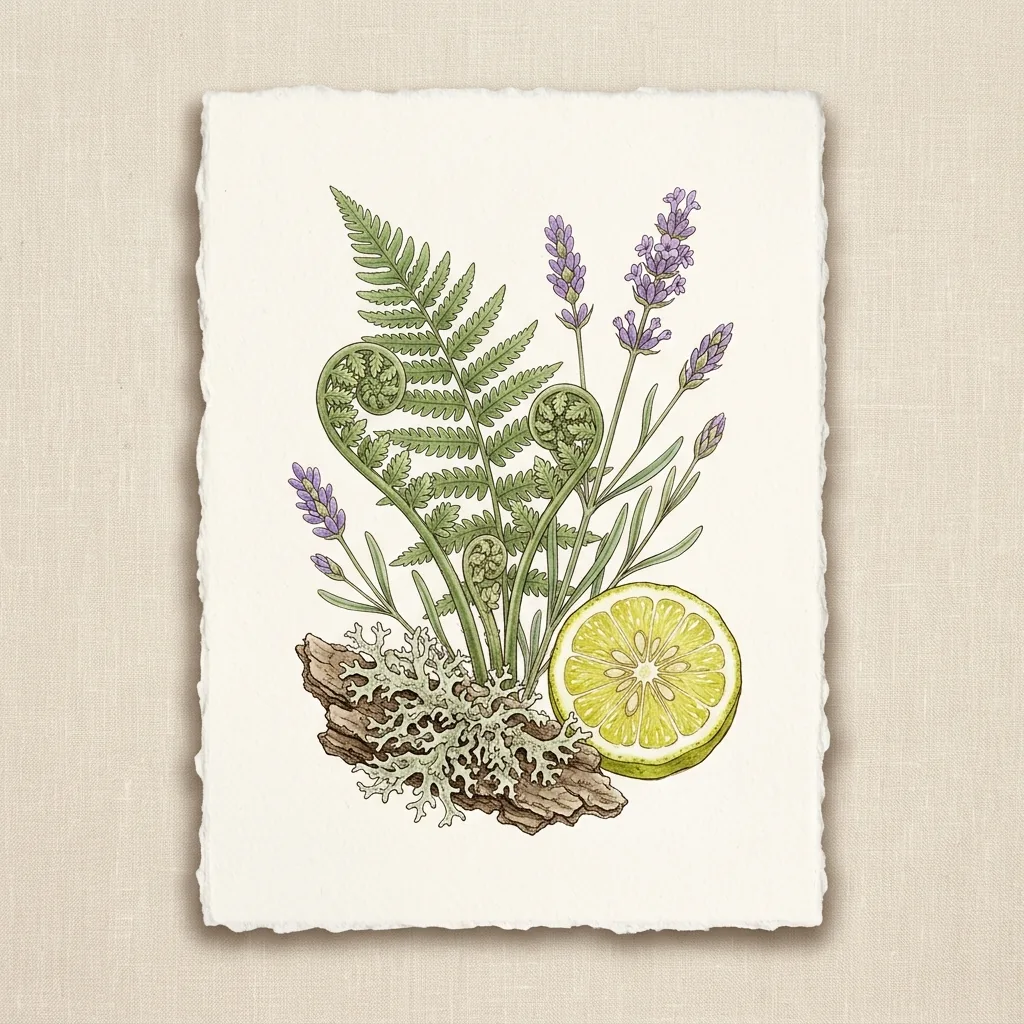
Walk down any fragrance aisle and you will see contemporary bottles sorted under comforting marketing labels like woody, fresh, floral, or amber. Yet beneath those modern adjectives lies an architectural grammar written more than a century ago in the workshops of Paris and Grasse. Two foundational structures — Chypre and Fougère — quietly govern roughly half of all classic and modern fine perfumery, giving otherwise fleeting natural and synthetic ingredients their unmistakable tension, silhouette, and architectural poise on skin.
Chypre: sunlit Mediterranean citrus against mossy shadow
Codified in 1917 by François Coty's landmark fragrance Chypre — named in French for Cyprus, the Mediterranean island celebrated for sun-baked citrus groves and wild rockrose — this family thrives on deliberate contrast. It opens with a bright flash of cold-pressed Calabrian bergamot, steps into a lush floral heart of jasmine or May rose warmed by balsamic cistus labdanum, and plunges decisively into an earthy, inky foundation of tree-grown oakmoss and dark patchouli leaf.
Think of a Chypre as olfactory chiaroscuro — crisp afternoon sunlight slanting across a damp forest floor. Resinous labdanum acts as the golden hinge holding bright citrus to bitter-cool moss without collapsing into sweetness. When scanning a note pyramid before buying, spotting bergamot above labdanum, oakmoss, and earthy patchouli immediately signals dry aristocratic tension rather than soft gourmand warmth, helping you predict how the fragrance will settle hours after the opening fades.
Fougère: the imaginary fern that defined tailored freshness
Earlier still, in 1882, the house of Houbigant unveiled Fougère Royale and named an entire family after the French word for fern — even though real fern fronds carry almost no scent. Rather than copying nature literally, perfumer Paul Parquet painted an imaginary portrait of shaded woodland freshness built on three interlocking pillars: brisk, camphoraceous lavender up top, rosy-green geranium and clary sage bridging the heart, and warm, hay-sweet coumarin (isolated from roasted tonka beans) resting over oakmoss and dry woods.
Notice how geranium naturally links both halves of the formula: sharing citronellol and geraniol molecules with true rose, its minty-floral edge cools the lavender while smoothly warming into sweet coumarin below. Where Chypre projects dry detachment and mysterious shadow, Fougère delivers tailored clarity — pressed linen, calm discipline, and clean-edged sophistication that has anchored classic masculine and crisp unisex perfumery for over 140 years.
How modern regulations rebuilt the mossy foundation
Both classic blueprints relied heavily on natural oakmoss (Evernia prunastri) harvested from European oak bark. When modern IFRA safety standards sharply capped raw oakmoss due to trace allergens like atranol and chloroatranol, master perfumers preserved both structures by substituting purified low-allergen moss extracts, clean fractionalized patchouli, synthetic evernyl, dry cedarwood, and mineral ambroxan — trading murky vintage bitterness for transparent, breathable projection across modern fabrics and warm climates. Even without heavy vintage moss, the core dialogue between bright citrus or herbaceous lift and grounded earthy depth remains instantly recognizable on skin.
Arabian houses bringing Eastern warmth to European bones
Today, Gulf and Arabian houses approach Chypre and Fougère not as museum relics, but as living skeletons ready for regional richness. Modern Arabian Fougères blend cool French lavender and sparkling bergamot with noble rose, clary sage, creamy sandalwood, and radiant white musk engineered to hold crispness under desert heat. Meanwhile, contemporary Middle Eastern Chypres layer smoky birch, golden pineapple, supple leather, and glowing ambergris over mossy patchouli — uniting Parisian discipline with unmistakable Arabian sillage and all-day tenacity for discerning wearers.
Wear classic tailored elegance reimagined for today with Al Wisam by Rasasi — bright bergamot and cool lavender opening into geranium, clary sage, noble rose, creamy sandalwood, and clean musk.