7 min read
Sacred Tears of Dhofar: Why Hojari Frankincense Rules Modern Niche Perfumery
From Omani Boswellia sacra trees to contemporary minimalist flacons — how green Hojari resin brings cool citrus-mineral radiance rather than church smoke.
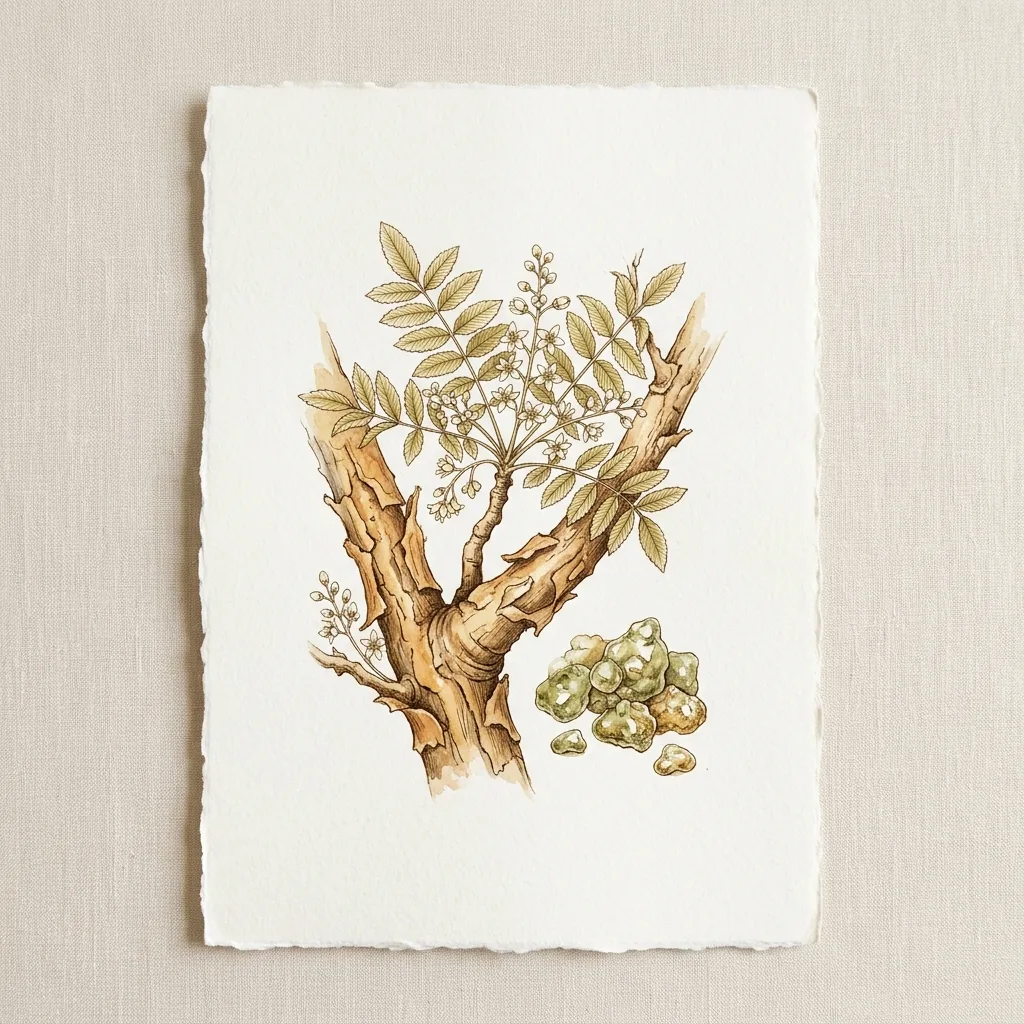
Mention frankincense to most fragrance wearers and they immediately picture glowing charcoal, thick cathedral haze, or the solemn hush of a winter majlis. Yet snap a pale green tear of Omani Hojari resin between your fingers and bring it to your nose before a match ever touches it. There is no ash here. Instead, the air fills with electric lime zest, crushed pine needles, cold limestone after rain, and a brisk saline tang blown off the Arabian Sea. That radiant, mineral clarity is precisely why frankincense has quietly become one of contemporary niche perfumery's sharpest architectural tools.
From Dhofar's limestone wadis to Royal Green Hojari
The finest frankincense on earth comes from Boswellia sacra, gnarled silver-barked trees clinging to the arid limestone ridges of southern Oman's Dhofar Governorate. Each summer, the khareef monsoon wraps these coastal escarpments in mist, nourishing the trees just before harvesters begin tapping in early autumn. Using a small iron chisel called a menqaf, collectors make shallow incisions in the trunk, allowing milky white sap to bleed out and harden into translucent droplets over two to three weeks.
The very first bleeding is left on the bark to protect the tree; only subsequent taps are gathered, and origin shifts everything. Resin from the high, misty Hajar slopes behind Hasik and Wadi Dawkah yields Hojari — prized above darker Najdi or Sha'bi grades. At the apex sits Royal Green Hojari: large, glassy tears tinted pale jade or turquoise, packed with bright volatile terpenes and reserved historically for Omani palaces and fine distillation rather than everyday burning.
Steam distillation versus charcoal smoke
Much of the confusion surrounding frankincense comes from how it is processed. Drop raw tears onto burning coal and pyrolysis shatters the resin into thick, smoky, woody plumes rich in heavy sesquiterpenes. In haute parfumerie, however, perfumers rely primarily on steam-distilled olibanum essential oil and CO2-extracted absolutes. Steam gently lifts only the lightest aromatic fractions — alpha-pinene, limonene, and myrcene — yielding a crystal-clear oil that smells like chilled bergamot rind, crushed cypress, green peppercorn, and sea air, without a whisper of soot. When deeper warmth is wanted, a resinoid or olibanum absolute retains the balsamic, slightly ambered body beneath that sparkling citrus top.
How green olibanum aerates heavy compositions
Walk through modern niche shelves from Paris to Dubai and you will notice frankincense serving a structural rather than decorative role. Where vanilla, labdanum, tonka bean, or dense agarwood risk feeling syrupy or airless, a modest dose of Omani olibanum acts like opening a high window in a warm stone room. Its pine-citrus lift cuts cleanly through dark resins, introducing vertical projection, meditative stillness, and an almost silvered translucence. Paired with black tea, crisp mint, or dry ambroxan, Hojari frankincense creates a modern skin-scent aura that feels weightless yet quietly commanding.
In doing so, contemporary perfumers are actually reclaiming frankincense's oldest reputation. Along the ancient Incense Route linking Dhofar's ports through Petra to Mediterranean capitals, Hojari resin was prized precisely for purification and bright clarity rather than heaviness. Stripped of literal charcoal smoke, green olibanum bridges Arabian resin heritage with cool minimalist tailoring — lending crisp citrus-tea compositions an unmistakable backbone of sacred stone.
Wearing frankincense beyond winter nights
Because steam-distilled frankincense leans cool, dry, and citrus-mineral rather than sweet, it thrives in temperatures that flatten heavier orientals. In spring sunlight or humid summer afternoons, olibanum anchored over bergamot, crisp woods, or airy musks refreshes the skin while holding its poised silhouette for hours. When sampling a frankincense fragrance, let it sit for fifteen minutes before judging: the opening snaps bright like sliced green lemon, before the resinous heart settles into cool stone, pale cedar, and quiet, contemplative calm.
Discover cool, luminous frankincense woven through crisp bergamot, mint, black tea, and ambroxan in Art of Arabia I by Lattafa.