6 min read
Rehabilitating Patchouli: From Kashmiri Silk Trunks to Modern Dark Luxury
Forget the bohemian clichés — patchouli arrived in Paris wrapped in royal cashmere shawls and still anchors the finest rose-ouds today.
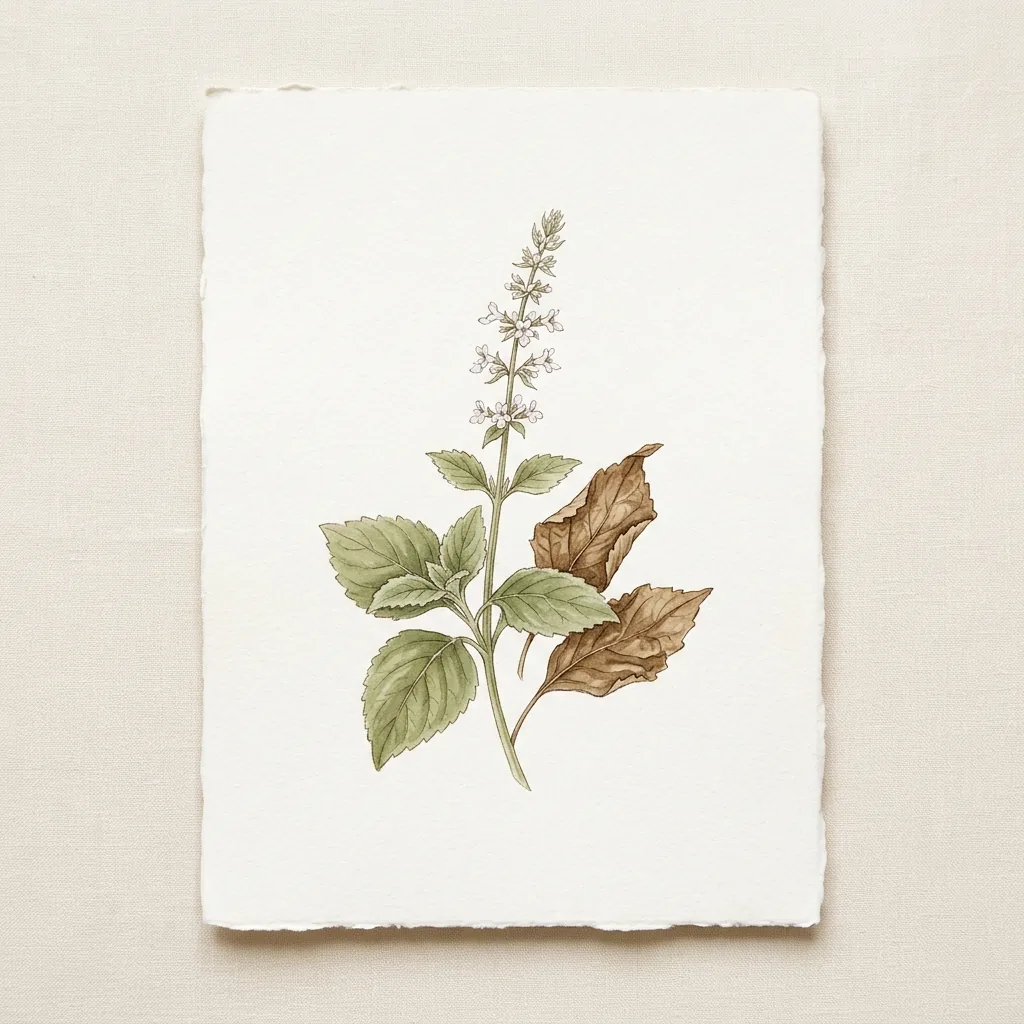
Few botanicals in perfumery have endured a stranger fall from aristocratic grace than Pogostemon cablin. Mention patchouli to anyone scarred by poorly aged festival oils and they immediately picture damp basements, dusty velvet, or harsh incense smoke. Yet a century and a half before it became a bohemian shorthand, that exact leaf was the intoxicating signature of European royal courts — a scent so synonymous with fine Asian silk and opulence that Parisian counterfeiters could not sell luxury textiles without perfuming every fold.
Cashmere trunks and Parisian authenticity
Patchouli's grand European entrance rode across oceans tucked inside wooden cargo chests. During the nineteenth century, merchant ships carrying priceless Kashmiri wool shawls and bolts of raw Asian silk packed dried patchouli leaves tightly between the folds to keep moths and beetles at bay during the long voyage from India and Southeast Asia. By the time those textiles reached salons in Paris, London, and Vienna, the rich, camphoraceous-earthy aroma had soaked deeply into every thread.
High society women soon treated that dark, spiced perfume as infallible proof of genuine origin. When French weavers tried producing domestic imitations of Kashmiri shawls, discerning buyers sniffed the cloth first and rejected anything odourless — forcing Parisian textile houses to import patchouli oil simply to stamp their fabrics with the aura of royal authenticity and distant trade routes.
Cellar earth versus crystalline molecular hearts
Freshly picked patchouli leaves barely smell at all; their character awakens only through shaded drying, gentle fermentation, and patient steam distillation, much like fine oolong tea or aged cellar wine. Traditional Indonesian oil distilled in iron vessels yields dark, loamy richness laced with bittersweet cacao, dried fig, cool camphor, and moist forest floor. Modern perfumery also deploys clean molecular fractions — distilled patchouli hearts and crisp biotech derivatives like Akigalawood — that pare away dampness to reveal glowing black pepper, dry dark wood, and sparkling architectural clarity.
Why rose, oud, and amber need patchouli's shadow
Without shadow, sweetness turns flat. That architectural truth explains why master perfumers still lean on patchouli to anchor the finest rose-ouds, saffron blends, and modern chypres. Its cool, slightly bitter cocoa depth acts as a dark velvet backdrop against which radiant saffron, spiced nutmeg, aromatic lavender, and luminous agarwood shine twice as brightly. Even indulgent vanilla and amber bases owe their poise to patchouli's grounding tension, preventing richness from slipping into sugary excess.
Chemically, patchouli owes that staying power largely to patchoulol — a bulky sesquiterpene alcohol that clings tenaciously to skin lipids and fabric fibres for over twenty-four hours. In classical French perfumery, it partnered with bergamot and labdanum to define the legendary chypre structure; in contemporary Arabian luxury, that same structural rigor locks seamlessly onto natural agarwood and musk, turning opulent spice into commanding, sculptural sillage.
Wearing dark patchouli with precision
Patchouli responds dramatically to temperature, humidity, and skin chemistry — more radically than almost any other botanical note. In crisp night air or cool autumn light, its camphoraceous mint edge feels stately, dry, and razor-sharp; once warmed against pulse points alongside smoky agarwood, spiced saffron, and soft skin musk, it unfurls slowly into bittersweet dark chocolate, aged tea leaves, and polished antique wood. Give any patchouli-anchored fragrance at least twenty minutes on bare skin before judging its silhouette — the true royalty always lives in its unhurried second act.
Command the room with regal patchouli anchored by saffron, nutmeg, lavender, agarwood, and musk in Badee Al Oud Oud for Glory by Lattafa.