6 min read
Liquid Silk: From Heritage Mysore Sandalwood to Sustainable Australian Santal
Why real sandalwood smells like warm cream rather than dry sawdust — and how perfumers preserved a sacred tree on the brink.
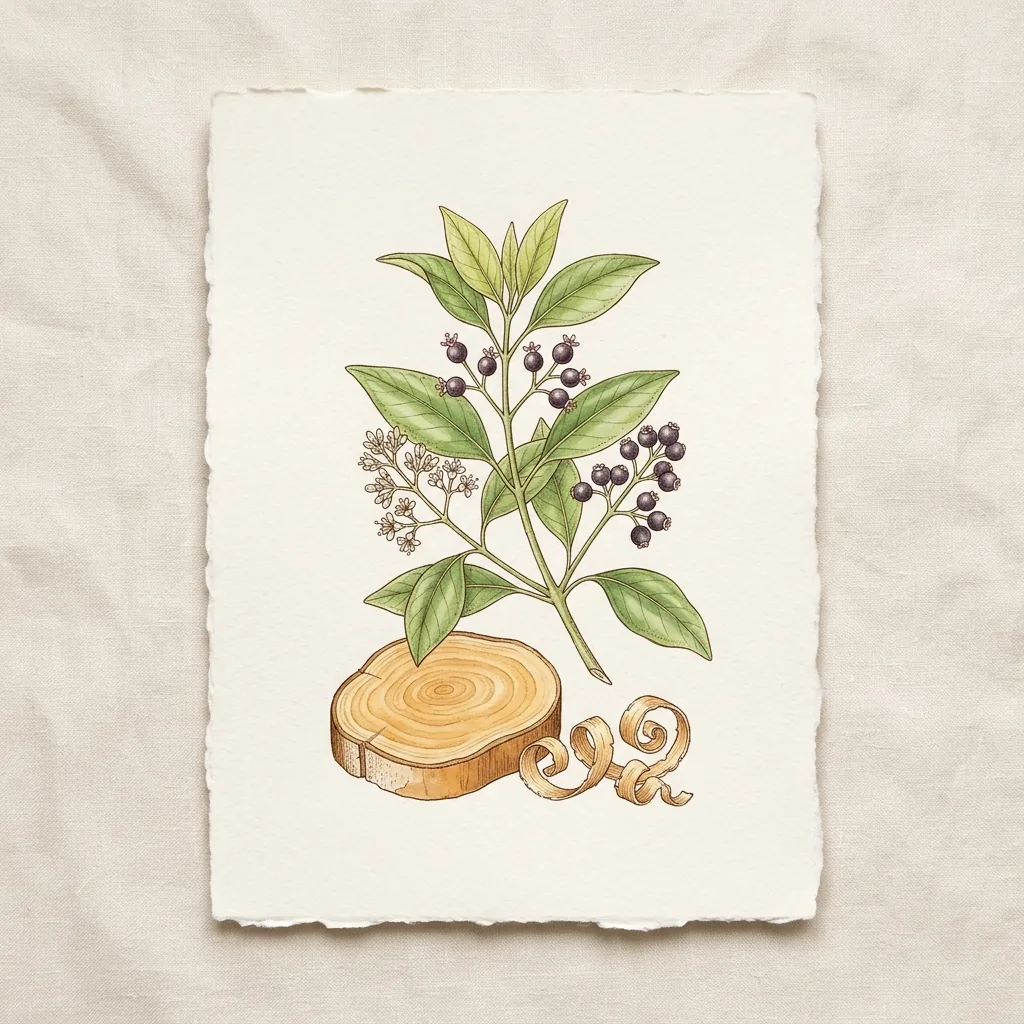
Most woods in perfumery speak in crisp, architectural lines — the sharp pencil shavings of Virginian cedar, the dry snap of cypress, or the dark smoke of guaiac. Real sandalwood speaks in liquid silk. Bring a drop of aged Santalum album oil to your wrist and there is no splintered edge at all, only warm steamed milk, roasted cashew nuts, sun-warmed skin, pale honeycomb, and a calm, breathing creaminess that clings gently for days without ever overwhelming a room.
Why true santal smells like warm cream, not sawdust
Botanically, sandalwood is a root hemiparasite — a slow-growing tree that anchors onto neighbouring roots to draw water and minerals while crafting dense, fragrant heartwood over twenty-five to forty years. Its unmistakable milky signature owes everything to two viscous sesquiterpene alcohols: alpha-santalol and beta-santalol. Together they generate that smooth, lactonic sheen, rounding off sharp edges in surrounding spices and florals while anchoring volatile notes gently to the skin.
Distilling that essence requires patience matched by strict selectivity. Pale outer sapwood contains virtually no scent and must be shaved away entirely to expose the golden-brown core and gnarled root base where oil concentrates most richly. The aromatic heartwood is then milled into coarse powder, soaked in water for days to soften cellular walls, and subjected to prolonged low-pressure steam distillation. Once bottled, fine santal oil continues maturing in glass for years, shedding any green roughness until nothing remains except velvety cream and quiet honeyed warmth.
From sacred Mysore forests to Western Australia
For centuries, southern India's Mysore forests produced the world's gold-standard Santalum album, prized across royal temples, Arabian attar houses, and Parisian ateliers alike. Yet relentless demand and illegal poaching pushed wild Indian groves to the brink of collapse, forcing strict export bans that changed perfumery forever. Rather than lose sandalwood altogether, perfumers turned toward Western Australia, where conservationists pioneered two vital paths: ethical harvesting of native Santalum spicatum — slightly drier, resinous, and subtly nutty — alongside sustainably managed plantations of true Santalum album.
At the same time, modern aroma chemistry created luminous sandalwood molecules such as Javanol and Polysantol. Far from cheap substitutes, these crisp molecules reinforce sustainable natural oils with airy, sunlit creaminess while allowing ancient Indian groves decades to recover.
Co-distillation and the modern spiced santal revival
Across Arabian and Kannauj traditions, sandalwood was never merely a bottom note; it served as the quiet cradle for entire florals. In classic deg-bhapka co-distillation, steam carrying fragile rose or jasmine vapours is piped directly into aged sandalwood oil, marrying fleeting petals into creamy wood so neither ever separates. Contemporary perfumers honor that enveloping warmth differently — weaving lactonic santal through green fig, brewed black tea, aromatic cardamom, and powdery iris for compositions that feel intimate, meditative, and deeply comforting.
Distinguishing creamy sandalwood from dry cedar accords
Many modern bottles advertised as 'santal' rely heavily on dry Virginian cedarwood, crisp papyrus, and sharp dill-like spices that smell brisk, papery, and angular rather than truly milky. Real sandalwood — or a thoughtfully composed santal accord rich in creamy santalol facets — feels tactile, rounded, and unhurried from start to finish. It stays polite in the opening hour, letting black tea, cardamom, or fig shine clearly, then blooms slowly from skin heat after lunch into a soft, golden halo that feels inseparable from whoever wears it.
Wrap yourself in creamy sandalwood woven with cardamom, ripe fig, black tea, iris, and vetiver in Liam Grey by Lattafa.