6 min read
Perfume at 35,000 Feet: Traveling, Decanting, and Protecting Bottles in Transit
Cabin pressure makes atomizers weep and cheap plastic vials ruin top notes — the practical guide to packing scent anywhere.
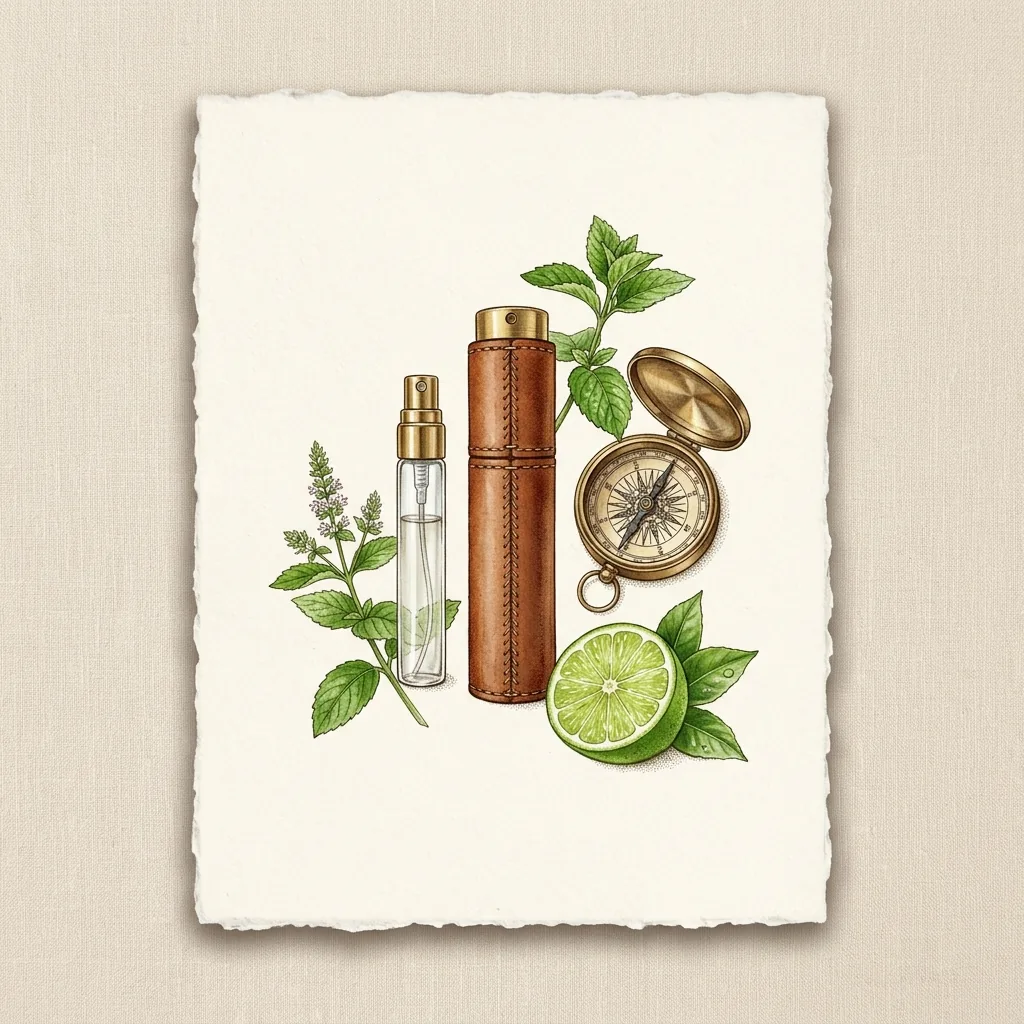
Few travel setbacks sting quite like unzipping a carry-on in a hotel room to discover freshly pressed shirts soaked in forty milliliters of your signature Eau de Parfum—not because heavy glass shattered in transit, but because the bottle quietly wept straight through its own crimped atomizer at thirty-five thousand feet. Packing fragrance well is equal parts fluid mechanics, packaging discipline, and sensory strategy.
Boyle's law in your wash bag: why cabins make sprayers weep
Although passenger cabins are pressurized, cruising altitude stabilizes near an equivalent pressure of six to eight thousand feet—markedly thinner than sea level. By Boyle's law, dropping ambient air pressure causes the small pocket of trapped air inside every sealed flacon to expand proportionally. If a near-full atomizer lies flat or tips upside down inside an overhead bin, expanding headspace gas presses downward on the liquid surface, pushing perfume straight up the internal dip tube and forcing precious milliliters past the valve spring.
Preventing barometric seepage requires two simple precautions before zipping your toiletry bag. Always leave ten to fifteen percent empty headspace at the top of any travel vial so expanding air never meets the dip-tube exit in liquid form, test spray nozzles beforehand to verify clean closure and a snug cap fit, and pack atomizers strictly upright inside cushioned pockets—never wedged sideways under heavy shoes or rigid chargers.
Carry-on limits versus cargo-hold temperature swings
International aviation security restricts cabin liquids to containers of 100 milliliters or smaller inside a clear resealable bag, tempting travelers to drop full 100ml or 200ml collector bottles into checked suitcases. Yet cargo bays subject prized flacons to rough conveyor drops and severe thermal swings—baked on sun-drenched tarmacs before plunging near freezing in flight. Repeated thermal expansion and contraction weakens crimped metal collars and oxidizes fragile bergamot and neroli esters, making carry-on glass decants far safer than the luggage hold—and once at your destination, keep vials away from steamy hotel showers, sunlit windowsills, or hot rental-car gloveboxes.
Borosilicate glass, PTFE tape, and why cheap plastic fails
Never entrust fine perfume to bargain polypropylene sprayers or rubber-valved bottom-fill tubes for trips lasting longer than a weekend. High-proof perfumery alcohol and citrus terpenes gradually leach volatile plasticizers, muting bright mint and grapefruit openings within days while evaporating steadily through spongy seals and loose caps. Bottom-pumping also drives air bubbles directly through the juice, accelerating premature oxidation before your return flight.
Invest instead in thick-walled borosilicate glass atomizers (5ml or 10ml) fitted with threaded metal collars and fine mist pumps. Transfer juice gently using a clean pipette or transfer nozzle rather than forceful bottom-filling, wrap two tight turns of white PTFE plumber's tape clockwise around the glass neck threads before screwing down the collar, and slip each labeled vial upright into a snug resealable pouch nestled safely between soft knitwear.
Encoding journeys with a dedicated travel scent
Thoughtful decanting also invites one of perfumery's finest rituals: pack a single 10ml vial of a crisp, memorable composition you have never worn at home and dedicate it strictly to that journey. Morning espresso on unfamiliar stone streets, salty harbor sea wind, sunlit museum courtyards, and late walks through busy spice markets bind swiftly to that fresh profile. Months later, uncapping the remaining precious drops at your dresser acts like an instant sensory passport—returning that destination's light, air, and quiet details intact in a single breath.
Crisp in transit and revitalizing the moment you land, Maahir Legacy by Lattafa pairs crushed mint, lime, and grapefruit with aromatic lavender, rosemary, black pepper, and dry vetiver.