7 min read
Maceration vs. Maturation: Does Letting a New Perfume Rest Actually Improve It?
Separating warehouse chemistry from collector folklore — why freshly bottled vanilla, spice, and oud blends genuinely deepen after first sprays.
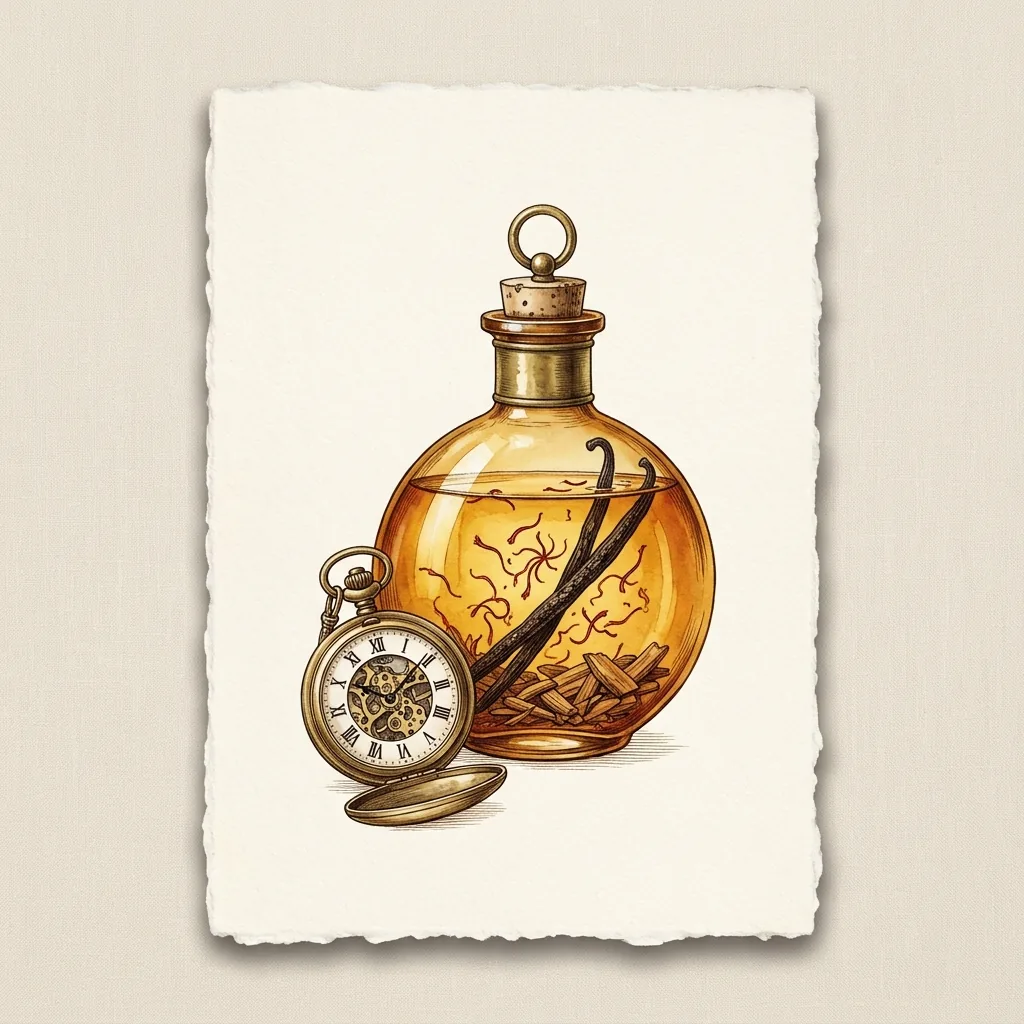
Every serious fragrance collector has lived the same quiet miracle. You unbox a freshly manufactured bottle, spray your wrist, and recoil slightly at a sting of raw alcohol or jagged top notes that vanish inside an hour. Disappointed, you tuck the bottle into the back of a dark wardrobe — only to pull it out six weeks later and discover rounded velvet, deeper sweetness, and twice the lingering trail. Is your imagination rewriting the scent, or does genuine chemistry continue unfolding inside the sealed glass?
Maturation versus maceration inside the perfumery
Online forums blur the two words constantly, yet laboratory perfumers treat maturation and maceration as distinct production stages. Maturation takes place before a single drop of alcohol touches the blend: dozens of raw essential oils, resinous absolutes, and aroma-molecules are weighed into a pure concentrate (the jus) and allowed to rest undisturbed so reactive compounds reach chemical equilibrium. The textbook example is Schiff base formation, where bright aldehydes slowly condense with methyl anthranilate — naturally abundant in neroli and jasmine — to yield a deeper, ambered, honeyed orange-blossom complex.
Maceration begins only after that matured concentrate is diluted into perfumer's ethanol and a precise trace of demineralized water inside large stainless-steel tanks. Over several weeks, alcohol, water, and heavy hydrophobic oils marry at the molecular level before the batch undergoes cold chilling near zero degrees Celsius and fine filtration to precipitate natural plant waxes that would otherwise turn the bottle cloudy on winter shelves.
Why fast-moving Gulf batches arrive slightly young
Heritage French houses once rested vat-macerated blends for months without commercial haste, treating tank time as an untouchable cost. Today, when a viral Arabian release triggers simultaneous backorders across Dubai, Riyadh, London, and New York, filling lines race around the clock to keep retailers stocked. A freshly stamped bottle delivered weeks after compounding may have spent minimal time in steel tanks before crimping, leaving thick vanillin crystals, spiced cinnamon bark, benzoin tears, and sandalwood still settling into their alcoholic carrier.
The first-sprays method and micro-headspace chemistry
Collectors call home resting maceration; strictly speaking, you are completing post-bottling maturation. Freshly crimped bottles are filled right up to the shoulder, leaving almost no air gap above the liquid. Pressing the atomizer eight to ten times clears inert production fluid from the dip tube and draws a tiny pocket of ambient oxygen into the glass headspace — enough to kick-start gentle, beneficial micro-oxidation across dense gourmand, spice, and resinous amber accords.
Once primed, return the bottle to a cool, dark drawer around 18°C to 22°C for three to six weeks. Expect real transformation mainly in vanilla, caramelized sugar, cinnamon, benzoin, leather, and oud-amber compositions: raw ethanol sharpness subsides, vanillin naturally darkens slightly toward honeyed cognac gold, and the heart-to-base transition tightens into one continuous chord. Crisp citrus colognes, by contrast, gain nothing from waiting because fragile lemon and bergamot terpenes shine brightest when freshly bottled.
Myths that spoil good perfume faster
Reject every internet shortcut promising overnight maturation. Vigorous shaking whips excess oxygen through the liquid and tears delicate top-note esters apart prematurely; sticking a bottle into the kitchen freezer or refrigerator shocks emulsions, risks wax crystallization, and lets food aromas creep past atomizer gaskets; parking clear glass on a sunlit dresser uses ultraviolet energy to shatter aromatic bonds permanently. Quiet darkness and unhurried patience remain the only alchemy great perfume respects.
Taste how patience rewards rich gourmand resin blends with Bade'e Al Oud Honor And Glory by Lattafa — roasted pineapple, caramelized crème brûlée, warm cinnamon, benzoin, and creamy sandalwood.