6 min read
Roots of Cool Earth: Decoding Haitian, Bourbon, and Javanese Vetiver
Grass above ground, labyrinth below — how a tropical soil-binding root became the ultimate emblem of tailored composure.
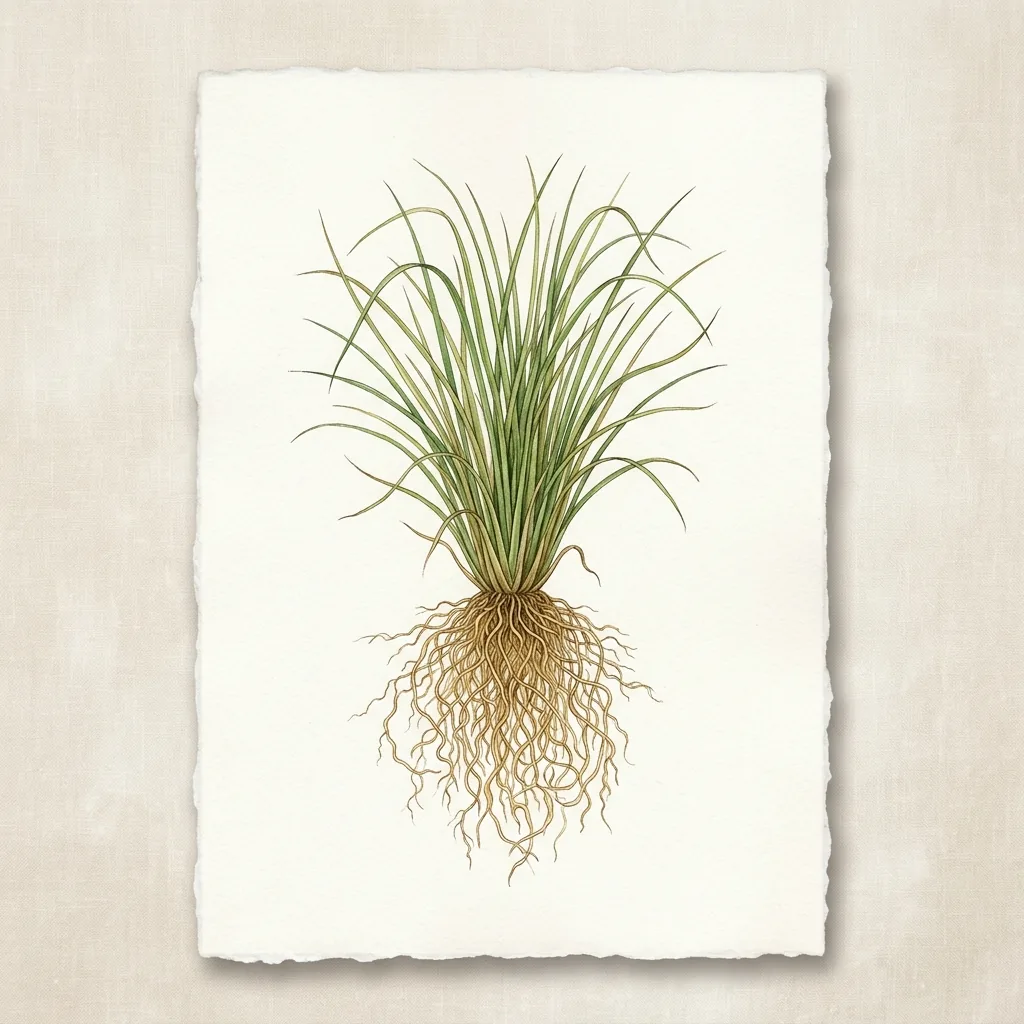
Above the ground, Chrysopogon zizanioides looks almost unassuming — tall, green, wind-bent tufts of tropical grass planted along steep volcanic hillsides to stop monsoon rains from washing the soil away. Below the surface lies a completely different architecture: an intricate subterranean web plunging up to three metres deep into damp earth. Washed clean, sun-dried, and slowly steam-distilled, those pale tangled rootlets surrender one of perfumery's finest emblems of tailored composure.
An entire landscape distilled from tangled roots
Unlike cedarwood or sandalwood, which come from fragrant trunks, vetiver's power resides solely in its dense root system — and its chemistry is correspondingly layered. Rather than relying on a single dominant molecule, vetiver oil weaves together dozens of heavy sesquiterpenes, led by khusimol along with alpha- and beta-vetivone. Because those molecules evaporate slowly, vetiver acts simultaneously as heart and natural fixative, holding citrus top notes upright while painting damp flint, snapped green twigs, grapefruit pith, roasted hazelnut, and cool forest shadow onto skin.
Capturing that richness demands stubborn physical labour. Farmers let the grass mature for eighteen to twenty-four months before digging deep to unearth intact root crowns without snapping the delicate oil-bearing hairs. After clay and pebbles are rinsed away and the fibrous mats dry under tropical sun, distillers pack them into heavy stills for gruelling eighteen-hour steam runs. Because vetiver's richest aromatic fractions are stubbornly dense, cutting the distillation short loses the smooth, nutty grounding that balances its sparkling green opening.
Three great terroirs: Haiti, Bourbon, and Java
Say 'vetiver' to a perfumer and the immediate follow-up question is always from where. Soil, mineral profile, harvesting age, and the metal of the still divide the ingredient into three distinct dialects. Haitian vetiver from the sandy coastal plains around Les Cayes is perfumery's silver standard: clean, radiant, and snapping with bitter grapefruit rind, green grass, and airy precision that feels effortlessly modern. Bourbon vetiver, cultivated on the volcanic slopes of Réunion Island, offers a softer, rounder beauty tinged with cool earth and a faint, almost rosy geranium warmth. Javanese vetiver stands at the opposite dramatic extreme: grown in rich Indonesian soil and traditionally distilled over wood fires in iron vessels, it smells dark, smoky, nutty, and slightly tarry, like damp roots beside dying embers.
From summer linen to autumn wool
Few raw materials cross seasons as gracefully as vetiver. In blistering July heat, Haitian vetiver paired with crisp grapefruit, sparkling ginger, ambroxan, and pale sandalwood slices through humidity like chilled mineral water over crushed citrus — sharp, dry, and endlessly breathable against white linen. Yet shift toward smoky Javanese fractions, nutmeg, or dark resins, and the very same botanical wraps snugly around heavy wool coats when temperatures fall, projecting understated authority without raising its voice. In Arabian-inspired modern blends, that interplay between bright citrus-ginger heat and cool woody root makes vetiver a seamless bridge between daytime clarity and evening poise.
Choosing your vetiver register
Before committing to a full bottle, test vetiver across two distinct moments: the sparkling first ten minutes on blotter and skin, and the calm woody drydown two hours later. If you want daily clarity for tailored shirts or warm afternoons, look for Haitian vetiver or crisp vetiveryl acetate — a refined esterification that softens harsh smoke while keeping citrus-woody sparkle intact. If you crave nocturnal depth and meditative shadow, reach for smoky Javanese blends — either way, few roots wear with such unwavering dignity.
Discover crisp, silvery vetiver energized by bright grapefruit, ginger, ambroxan, and smooth sandalwood in Al Qiam Silver by Lattafa.